29. Sarah E. Rothman, Shannon L. LaDeau, Jane M. Lucas, and Paul T. Leisnham. Leaf litter characteristic of low-income urban blocks improves population performance of Aedes albopictus (Diptera: Culicidae) and Culex pipiens mosquitoes. Under review.
28. Lucas, Jane M., Corinne M. Walsh, Noah Fierer, Evan M. Gora, Michael S. Strickland. Anthropogenic activity disrupts the diversity, abundance, and ecological drivers of antibiotic resistance genes in soil. Under review.
27. Sone, Bronte; Osburn, Ernest; Lynch, Laurel; Lucas, Jane M.; Strickland, Michael. Cover crop composition, not diversity, drives agroecosystem multifunctionality and wheat yield. Under review.
26. Lucas, Jane M.; Budny, Michelle; Lemoine, Nathan. 2025. Insect herbivores stabilize grassland ecosystem functions by destabilizing belowground communities under abiotic stress. Ecology. https://doi.org/10.1002/ecy.70254
25. Laurel R. Humphreys†, Jane M. Lucas, Michelle E. Spicer. 2025. Canopy height and epiphytic bryophytes shape fungal communities in a temperate rainforest. Ecology and Evolution. https://doi.org/10.1002/ece3.72241
24. Arielle Biro†, Michelle Y. Wong, Jane M. Lucas, Sarah A. Batterman, Carla Staver. 2025. Native soil microbes buffer savanna trees against nutrient limitation but are drought sensitive. Journal of Ecology.
23. Carl Wepking, Jane M. Lucas, Virginia S. Boulos and Michael S. Strickland. 2024. Antibiotic legacies shape the temperature response of soil microbial communities. Frontiers in Microbiology. https://doi.org/10.3389/fmicb.2024.147601
22. Ramoneda, J, K. Fan, J.M. Lucas, H. Chu, A. Bissett, M.S. Strickland, N. Fierer. 2024. Ecological relevance of flagellar motility in soil bacterial communities. The IMSE Journal. https://doi.org/10.1093/ismejo/wrae067
21. Lemoine, N.P, M.L. Budny, E. Rose, J.M. Lucas, C.W. Marshall. 2023. Seasonal soil moisture thresholds inhibit bacterial activity and decomposition during drought in a tallgrass prairie. Oikos. https://nsojournals.onlinelibrary.wiley.com/doi/full/10.1111/oik.10201
20. Barrera, A.†, J.M. Lucas, E. Gora. 2023. Suspended sections within downed dead wood are drier, have altered decomposer communities, and slower decomposition. Ecosystems. https://doi.org/10.1007/s10021-023-00874-w
19. McBride, S.G., E.D. Osburn, J.M. Lucas, J.S. Simpson, T. Brow, J.E. Barrett, M.S. Strickland. 2023. Volatile and dissolved organic carbon sources have distinct effects on microbial activity, nitrogen content, and bacterial communities in soil. Microbial Ecology. 0.1007/s00248-022-01967-0
18. Osburn, E.D., P.J. Hoch†, J.M. Lucas, S.G. McBride, M.S. Strickland. 2022. Evaluating the roles of microbial functional breadth and home-field advantage in leaf litter decomposition. Functional Ecology. 10.1111/1365-2435.14026
17. Lucas, J.M., B.S. Bronte†, D. Whitmore†, M.S. Strickland. (2021). Antibiotics and temperature interact to disrupt soil communities and their function. Soil Biology and Biogeochemistry. https://doi.org/10.1016/j.soilbio.2021.108437 SBB_ABxT_FullArticle
16. Naveen J., J.M. Lucas, N. Vishwanath, R. Findlay, J. Sprinkle, M.S. Strickland, E. Winford. 2021. Investigation of relationships between fecal contamination, cattle grazing, human recreation, and microbial source tracking markers in a mixed-land-use rangeland watershed. Water Research. https://doi.org/10.1016/j.watres.2021.116921
15. Lucas, J.M., J. Jonas-Bratten, A.N. Laws, D.H. Branson, S.C. Pennings, C.M. Prather, and M.S. Strickland. 2021. Functional and taxonomic diversity of grasshoppers differentially shape above- and belowground communities and their function. Functional Ecology. https://doi.org/10.1111/1365-2435.13682 PDF
14. Lucas, J.M.*, McBride, S.*, and M. Strickland. (2020) Trophic structure mediates soil microbial community composition and function. Soil Biology and Biochemistry. https://doi.org/10.1016/j.soilbio.2020.107756
13. Danielsson, R.J., J.M. Lucas, Dahlberg, M. Ramin, S. Agenas, I. Tapio, A. Bayat, T. Hammer and T. Roslin. (2019) Context-dependence of antibiotic effects on methane emissions from livestock. Royal Society Open Science. https://doi.org/10.1098/rsos.182049
12. Wepking, C., B. Badgley, J. Barrett, K. Knowlton, K. Minick, P. Ray, J.M. Lucas, S. Shawver, M. Strickland. (2019) Prolonged exposure to manure from livestock‐administered antibiotics decreases ecosystem carbon‐use efficiency and alters nitrogen cycling. Ecology Letters. https://doi.org/10.1111/ele.13390
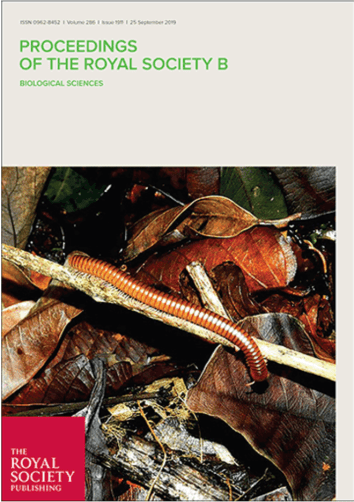
11. Lucas, J.M., E.M. Gora, A. Salzberg†, and M. Kaspari. (2019) Antibiotics as chemical warfare across multiple taxonomic domains and trophic levels. Proc. Roy. Soc. B. http://dx.doi.org/10.1098/rspb.2019.1536
10. Gora, E.M. and J.M. Lucas. (2019) Dispersal and nutrient limitations of canopy-level decomposition: evidence from experimental manipulations of epiphytes and macronutrients. Functional Ecology. https://doi.org/10.1111/1365-2435.13440
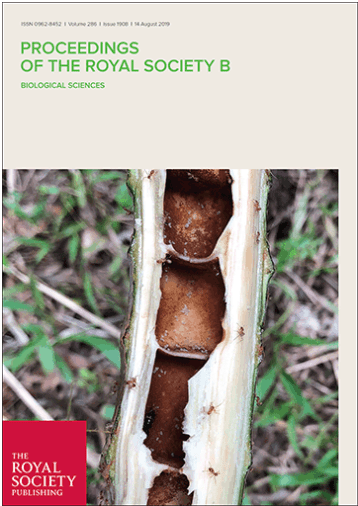
9. Lucas, J.M., A.A. Madden, C.A. Penick, M.J. Epps, P.R. Marting, J.L. Stevens, D.J. Fergus, R.R. Dunn, E.K. Meineke. (2019) Ants control insect pathogens, but not plant pathogens, inside their nests in a model ant-plant mutualism. Proc. R. Soc. B 286: 20191026. http://dx.doi.org/10.1098/rspb.2019.1026
Highlighted in the following: Nurseries of Azteca Ants are Cleaner than Human Ones, For at Least One Species, Ant Nurseries Are Cleaner Than Human Ones
8. Gora, E.M., J.M. Lucas, and S.P. Yanoviak. (2019) Microbial composition and decomposition rates vary with environmental conditions from the ground to the canopy in a tropical forest. Ecosystems. https://link.springer.com/article/10.1007/s10021-019-00359-9

7. Lucas, J.M., N.A. Clay, and M. Kaspari. (2018) External myrmecotrophy benefits host plants of dominant canopy ant, Azteca trigona. Ecological Entomology. https://doi.org/10.1111/een.12637
Highlighted on the Smithsonian Channel: 10 Tons of Ant Poop Keeps This Rainforest Thriving
6. Lucas, J.M., E.M. Gora, and A. Alonso. (2017) A view of the global conservation job market and how to succeed in it. Conservation Biology. https://doi.org/10.1111/cobi.12949
5. Lucas, J.M., B. Bill, B. Stevenson, M. Kaspari. (2016) The microbiome of the ant-built home: the microbial communities of a tropical arboreal ant and its nest. Ecosphere. https://doi.org/10.1002/ecs2.1639
4. Kaspari M., N.A. Clay, J.M. Lucas, S. Revzen, A.D. Kay, and S.P. Yanoviak. (2015) Thermal adaptation and phosphorus shape thermal performance in an assemblage of rainforest ants. Ecology. https://doi.org/10.1890/15-1225.1
3. Kaspari M., N.A. Clay, J.M. Lucas, S.P. Yanoviak, and A.D. Kay. (2014) Thermal adaptation generates a diversity of thermal limits in a rainforest ant community. Global Change Biology.
2. Clay, N.A., J.M. Lucas, M. Kaspari and A.D. Kay. (2013) Manna from heaven: Refuse from an arboreal ant connects aboveground and belowground processes in a lowland tropical forest. Ecosphere. https://doi.org/10.1890/ES13-00220.1
1. Kaspari M., D. Donoso, J.M. Lucas, T. Zumbusch and A.D. Kay. (2013) Using nutritional ecology to predict community structure: field test in Neotropical ants. Ecosphere. https://doi.org/10.1890/ES12-00136.1
*represents shared first authorship
†Denotes Student Mentee Co-Author
 Jane Lucas, PhD